
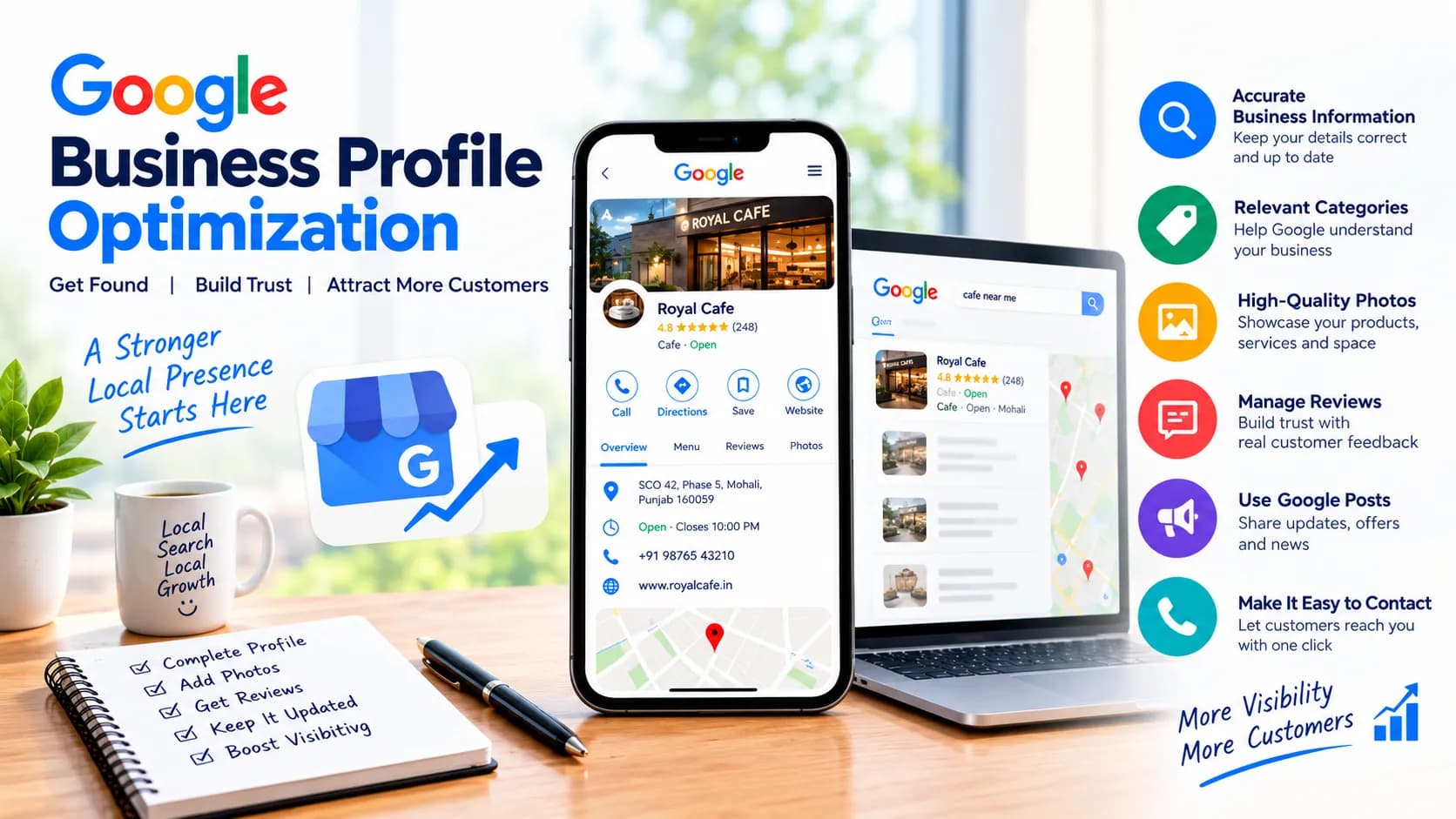
For a local business, visibility on Google can influence whether a nearby customer calls, visits, books, or chooses another company. People often make quick decisions after seeing a business listing, especially when they need a product or service immediately. This makes Google Business Profile optimization a critical component of local marketing strategies.
A profile that is complete, accurate, useful, and regularly maintained gives searchers more information before they contact a business. It also creates a stronger first impression than a listing containing only basic contact details.
Google Business Profile Optimization
10 Steps to Turn Your Listing Into a Customer-Ready ProfileStart With Accurate Business Information
The foundation of a useful profile is reliable information. Your business name, address, phone number, website, and operating hours should match the details customers see elsewhere.
Review holiday hours, temporary closures, service changes, and other details whenever something changes. Keeping these elements current makes your listing more dependable.
Choose Relevant Business Categories
Google uses business categories in order to figure out what a company offers. Your principal category should describe the main activity of the business, while any extra categories should be relevant. Choosing unrelated categories can make a profile confusing.
Relevance is more crucial than including every accessible option in Google Business Profile Optimization. For example, a residential plumber should focus on categories related to plumbing rather than selecting unrelated services because they contain popular search terms.
Write a Description That Sounds Human
Your business description should briefly clarify what the company performs. Mention key services, target customers, service areas, and useful specialties in straightforward language. A bakery might describe custom cakes and fresh bread, while a digital agency could mention web design, SEO, and paid advertising.
Avoid repeating the same keyword throughout the description. The goal is to help a potential customer understand your business without making the copy sound forced or created only for search engines.
Show the Business With Real Photos
Photographs can provide information that words cannot. A storefront image helps visitors recognize the location. Product photos show what customers can purchase. Team pictures introduce the people behind the company, while project images demonstrate completed work.
Use clear, authentic photos that represent the business honestly. Refresh the visual material if the products, services, or location have been updated.
Respond to Customer Reviews Professionally
Reviews can shape how potential customers view a local company. Genuine feedback provides insight into the customer experience, while thoughtful responses show that the business pays attention.
Encourage real customers to leave honest feedback. When reviews appear, respond professionally. Thank customers for positive comments and address criticism calmly.
Make Your Services Easy to Find
Customers should not have to sift through multiple sites in order to understand what you offer. Use clear service names and concise descriptions to explain your main offerings. For example, a home improvement company could separate kitchen remodeling, bathroom renovations, and repair work.
A marketing agency might list SEO, content marketing, website development, and Google Ads separately. Clear service information helps people quickly decide whether your business matches their needs.
Keep the Profile Current
A business profile should evolve in tandem with the company. New services, products, events, announcements, and seasonal promotions can alter what customers need to know.
Regularly review your listing and remove information that is no longer relevant. Add timely updates when appropriate.
Create an Easy Next Step
Finding a business is only the beginning. Once someone discovers your listing, the next action should be obvious. Customers may want to call, visit, request directions, open your website, or schedule an appointment. Check that links and contact details work correctly and lead to useful destinations.
Think about the journey from the customer's perspective: they searched for something, found your business, and now need a simple way to continue.
Support Your Profile With Your Website
A Google Business Profile should complement the company's website. Important company details should be consistent across both.
Relevant local pages, helpful content, clear service information, testimonials, and convenient contact options can expand on what visitors discover in search.
Keep Improving Over Time
Google Business Profile optimization is not something that happens once. Businesses should periodically review their hours, categories, services, photographs, reviews, links, and customer interactions. Regular checks can reveal obsolete information or possibilities to improve the profile's usefulness. Changes in business priorities may also require adjustments.
Conclusion
A Google Business Profile can become a valuable customer touchpoint when it is managed carefully. Accurate information, relevant categories, genuine photographs, useful service details, professional review responses, and easy contact options all contribute to a stronger local presence.
The goal of Google Business Profile optimization is not to overload a listing with keywords. It is to give potential customers clear, trustworthy information and an easy path toward the next step. For local businesses, consistent attention to these details can turn a basic Google listing into a practical part of their digital marketing strategy.