
When someone visits a website for the first time, they form an impression of the business within moments. A cluttered layout, confusing menu, or difficult checkout process can make visitors leave before they understand what the company offers. On the other hand, a thoughtfully designed website can help users find information quickly, feel comfortable, and take the next step with confidence.
This is one of the reasons why companies decide to hire an experienced web designing company in Mohali. Modern web design combines creativity, functionality, technology, and an understanding of customer behavior. The objective is not simply to create an attractive website but to build an online environment that feels effortless to use.
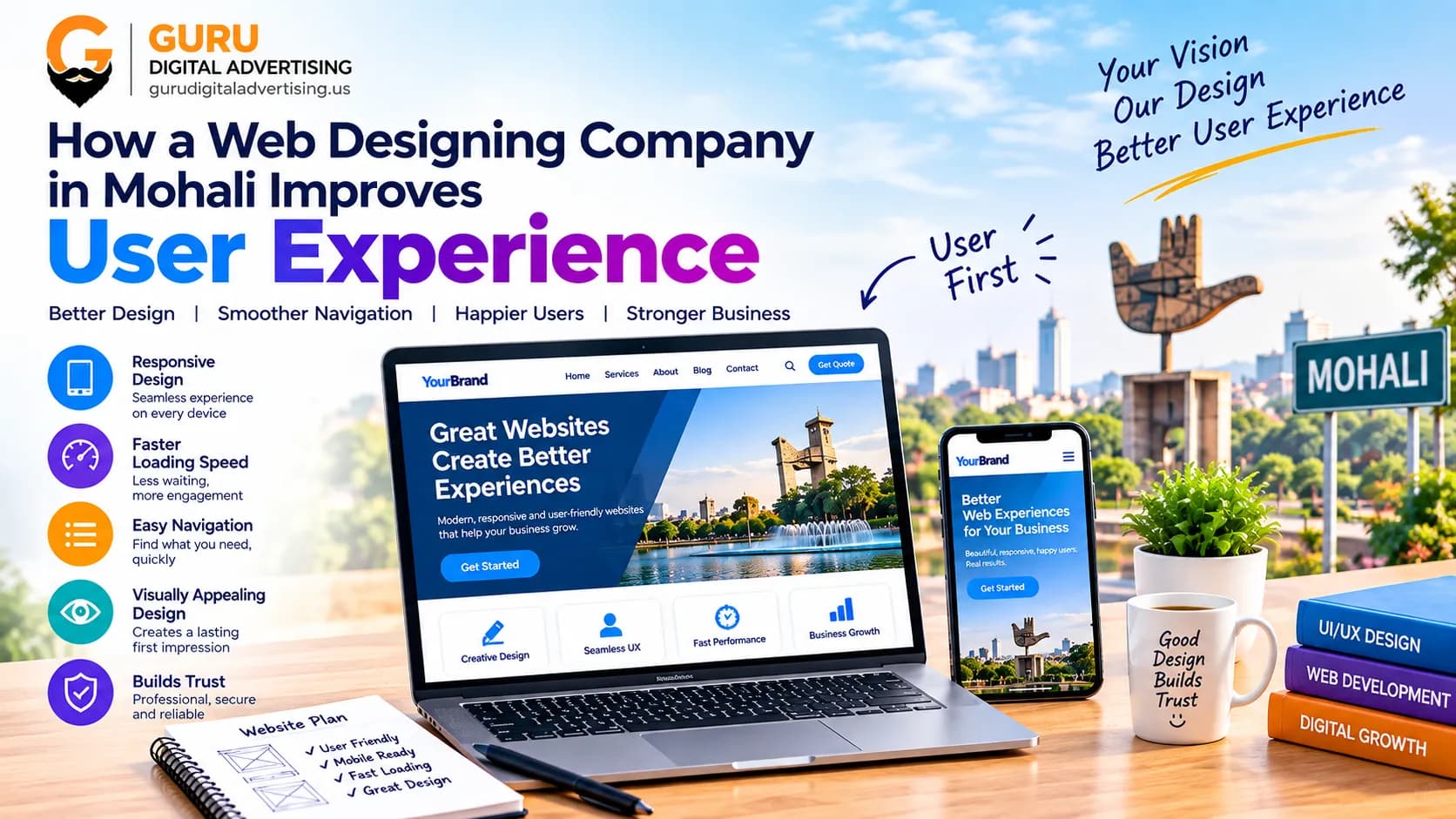
How a Web Designing Company in Mohali Improves User Experience
10 Core Areas of User-Centric Web DesignUnderstanding What Visitors Actually Need
Effective website design begins with the audience rather than the appearance of the website. Different businesses attract different types of users, and each audience may have its own expectations. A web designing company in Mohali can study the business, its services, competitors, and customer journey before deciding how the website should be organized.
For instance, a visitor looking for a local service may immediately want pricing, location, reviews, and contact information. An online shopper, meanwhile, may care more about product categories, filters, delivery information, and payment options. Designing for such requirements results in a more relevant experience and saves visitors from having to work too hard to get their answers.
Building a Website That Is Easy to Explore
A website should feel intuitive. Visitors should be able to move from one section to another without constantly wondering where they need to click next. A web designing company in Mohali can organize pages into a logical hierarchy and create navigation that reflects the way customers search for information.
Main services can be grouped clearly, important pages can remain easy to access, and internal links can connect related content. Thoughtful navigation also reduces unnecessary clicks. When visitors can reach a product, service, or contact page in a few simple steps, the entire browsing experience becomes more comfortable.
Making Mobile Browsing Convenient
People no longer interact with websites exclusively through desktop computers. Smartphones have become a major part of everyday online activity, so a website needs to function properly on smaller screens. Responsive design allows page layouts to adjust according to the device being used. Images resize correctly, text remains readable, menus become mobile-friendly, and buttons are positioned for touch interaction.
A professional design team can also test pages across different screen sizes to identify issues that may not be obvious during desktop development. This creates a more consistent experience for users whether they visit from a phone, tablet, or computer.
Reducing Friction With Better Performance
Users grow dissatisfied when sites take too long to load or interactive parts reply slowly. Website performance is therefore closely connected with usability. Designers and developers can improve performance by compressing media files, limiting unnecessary scripts, simplifying page structures, and selecting technologies that support efficient loading.
A solid technical basis can help pages feel more responsive. The benefit extends beyond convenience. When visitors can access information without interruptions, they are able to browse products, read service pages, complete forms, and interact with website features more comfortably.
Using Design Elements With a Purpose
Effective design is not about filling every empty space with graphics or animations. Each visual component should help users understand the page or complete an action. Typography can establish a clear information hierarchy. Whitespace can separate important sections. Icons can simplify complex ideas. Images can demonstrate a product or service.
Buttons can direct attention toward actions such as “Request a Quote,” “Book Now,” or “Contact Us.” A skilled web designing company in Mohali can bring these elements together while maintaining the company's visual identity. The result is a website that looks professional without becoming distracting.
Presenting Information in a Scannable Format
Online visitors rarely read every word on a page from beginning to end. They often scan headings, highlighted phrases, lists, and short sections before deciding what deserves closer attention. Website content should therefore be organized for quick comprehension.
Clear headings, concise paragraphs, descriptive subheadings, useful visuals, and appropriately placed calls to action can make information easier to absorb. For service businesses, this could mean presenting key benefits near the top of the page, followed by details, frequently asked questions, testimonials, and an easy way to get in touch.
Creating Trust Through Consistency
People naturally become more cautious when a website appears unreliable or outdated. Broken links, inconsistent branding, poor-quality images, missing contact information, and confusing forms can all affect how users perceive a business.
A modern website can communicate professionalism through consistent typography, accurate business details, quality visuals, clear messaging, testimonials, and well-structured pages.
Secure contact forms and transparent information can also make visitors feel more confident about sharing their details or making an inquiry. Good design therefore supports not only usability but also the credibility of the business behind the website.
Making Websites More Inclusive
A positive user experience should not depend on a visitor having perfect vision, using a mouse, or navigating the site in one particular way. Accessibility is supposed to be considered throughout the design process.
Readable font sizes, understandable labels, meaningful image descriptions, sufficient contrast, logical heading structures, and keyboard-friendly interactions can make websites easier for a wider range of users.
Accessibility improvements often benefit everyone because they also make websites clearer, simpler, and easier to navigate.
Improving UX After the Website Goes Live
Website design should not stop on launch day. Real visitors can reveal problems that may not appear during development. Businesses can review analytics, forms, navigation patterns, engagement data, and customer feedback to identify areas that need improvement.
Perhaps users are abandoning a form, overlooking an important service, or struggling to find a particular page. These observations can guide future changes. A professional web designing company in Mohali can continue refining the website based on actual user behavior rather than relying entirely on assumptions.
Why Businesses Choose a Web Designing Company in Mohali
For businesses in and around the region, working with a local team can make collaboration more convenient. Project discussions, design reviews, revisions, and technical conversations can be handled more easily when communication is straightforward.
An experienced web designing company in Mohali can also bring different skills together, including UI design, development, responsive design, content structure, performance optimization, and ongoing support.
The right team focuses on the business objective as well as the visual result. Instead of designing pages in isolation, it can create a complete website experience that guides visitors from their first interaction toward meaningful actions.
Conclusion
Dozens of little design decisions influence the user experience. Navigation, mobile compatibility, page speed, content structure, visual hierarchy, accessibility, and trust signals all influence how comfortably people interact with a website.
A skilled web designing company in Mohali can connect these elements into a website that feels natural and purposeful. When the design is built around the needs of real users, visitors can find information faster, understand the brand more easily, and interact with the business with fewer obstacles.
In the long run, better user experience can turn a website from a simple online presence into a useful business tool—one that supports customer engagement, inquiries, and sustainable digital growth.