
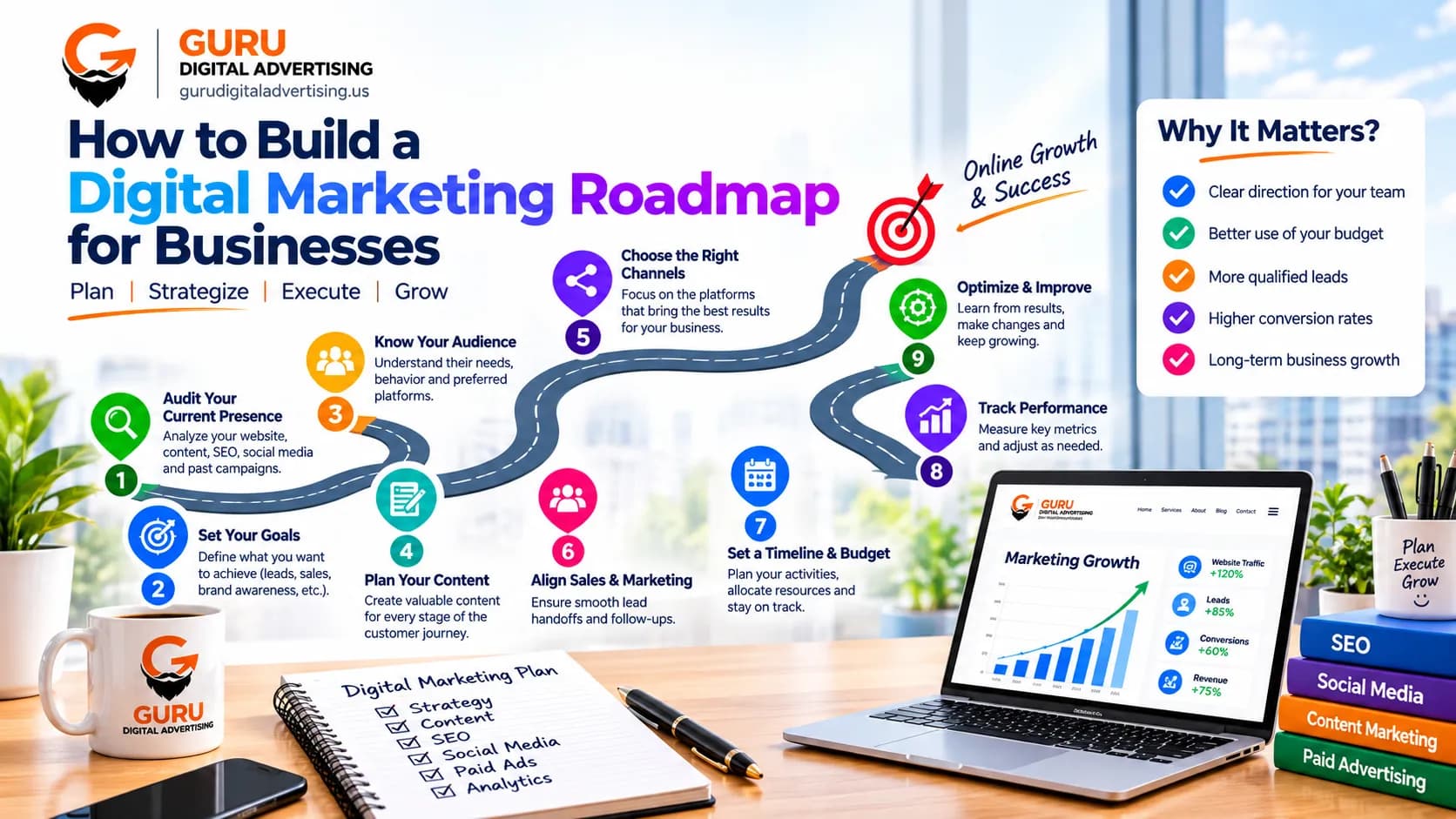
Digital marketing can become confusing when a business promotes itself across several channels without a clear direction. One team may handle social media, another may run advertising, while someone else manages website content or search optimization. Each activity can be useful, but without a digital marketing roadmap, marketing may consume time and money without producing dependable results.
A digital marketing roadmap connects these activities. It sets a practical direction for deciding what needs to happen, when it should happen, which channels deserve attention, and how success will be measured. Rather than treating marketing as disconnected tasks, businesses can use a roadmap to connect online efforts with commercial objectives.
Define Clear Business Goals
The first step is deciding what the company wants digital marketing to accomplish. A digital marketing roadmap should begin with business outcomes instead of individual posts, campaigns, or software tools.
Consider the desired result. Is the priority generating qualified enquiries, increasing online sales, strengthening brand awareness, retaining customers, or entering a new market? Once the objective is established, selecting suitable activities becomes easier.
Make goals measurable whenever possible. Targets such as increasing qualified leads, improving conversion rates, lowering acquisition costs, or generating additional revenue provide a stronger foundation than vague goals like “improve visibility.”
Evaluate Your Existing Digital Presence
Before planning the next stage, understand what is already working. Review the website, organic search performance, existing content, advertising campaigns, social platforms, email activity, and lead management process.
Look for gaps and strengths. A website may attract visitors but produce few inquiries. An advertising campaign may receive clicks but deliver weak conversions. Social posts may gain attention without contributing to business results.
This assessment gives the digital marketing roadmap a realistic starting point and helps avoid repeating activities that are not producing useful outcomes.
Identify the Right Audience
Successful marketing begins with understanding the people most likely to become customers. Research their needs, concerns, buying motivations, preferred platforms, and common questions.
Different customer groups may require different messages. A business could communicate differently with first-time buyers, returning customers, corporate clients, or local consumers.
Choose Channels Strategically
Trying to maintain every available platform can stretch a team too thin. Select channels according to audience behavior, sales cycles, competition, and business priorities.
SEO can support long-term organic visibility. Paid search can reach people showing purchase intent. Social media can strengthen awareness and engagement. Email can nurture prospects and customers. Content marketing can educate audiences and demonstrate expertise.
The best combination depends on the business. A B2B company may emphasize search and professional networking, while a consumer brand may rely more on social content and paid promotion.
Create a Content Roadmap
Content should have a purpose rather than being published simply to maintain activity. Map topics to stages of the customer journey.
Educational articles can attract people researching a problem. Comparison pages can assist evaluation. Case studies can demonstrate results. Product or service pages can support purchasing decisions. Social content can introduce ideas and encourage engagement.
A content calendar can organize topics, formats, deadlines, target keywords, team members, and intended outcomes. This improves consistency and reduces rushed publishing.
Connect Marketing and Sales
Generating inquiries is only one part of digital growth. Businesses also need a clear process for turning inquiries into opportunities and customers.
Marketing and sales teams should agree on lead quality, ownership, response times, and follow-up procedures. CRM systems, forms, email workflows, and messaging automation can reduce delays and keep prospects from being overlooked.
Connecting campaign information with sales outcomes reveals which channels create valuable opportunities. This is more meaningful than judging performance through clicks or social engagement alone.
Build a Realistic Timeline
A digital marketing roadmap becomes easier to execute when activities are divided into manageable stages. Quarterly planning can be more practical than trying to predict every marketing task for an entire year.
An initial phase might focus on website improvements, tracking, audience research, and campaign preparation. A later phase can expand content, test advertisements, and improve conversion paths. Once successful activities are identified, the business can invest more heavily in them.
Set a Sensible Budget
Marketing investment should reflect business priorities and expected returns. Rather than splitting money equally across every platform, identify the channels most likely to support the primary objective.
Account for advertising, content creation, technology, design, analytics, and specialist support. Keeping some budget available for testing can help businesses respond to opportunities.
Measure Meaningful KPIs
A roadmap needs clear performance indicators. Depending on the business model, these may include qualified leads, conversion rates, acquisition costs, revenue, return on ad spend, organic traffic, repeat purchases, or customer lifetime value.
Avoid focusing only on impressive-looking numbers. Thousands of views have limited business value if they do not reach the right audience or contribute to meaningful actions.
Choose metrics that connect directly to the original business goal. That makes reporting more useful and helps decision-makers understand results.
Review and Improve the Digital Marketing Roadmap
Digital marketing is constantly changing. Customer behavior, search trends, competition, advertising costs, and platform features can shift over time.
Review results regularly instead of waiting until the end of the year. Monthly monitoring can uncover immediate problems, while quarterly reviews can reveal broader patterns and opportunities.
Underperforming activities can be adjusted, paused, or replaced. Strong channels can be expanded.
Final Thoughts
Creating a digital marketing roadmap gives businesses a practical framework for turning scattered online activities into a coordinated strategy. It begins with business goals, evaluates the current position, defines the audience, selects appropriate channels, and establishes content, timelines, budgets, and measurement.
The real benefit is clarity. Teams understand their priorities, leaders can make better spending decisions, and performance can be judged against business outcomes instead of surface-level activity. Whether the company is a startup, local business, eCommerce brand, or established organization, a thoughtful roadmap can make digital marketing easier to manage.
With disciplined execution, regular analysis, and continuous optimization, a digital marketing roadmap can turn online promotion into a focused growth system that attracts relevant audiences, supports sales, and creates measurable progress.
Continue reading for more information about:
- Google Ads vs. SEO: Which is most suitable for your business?
- Google Business Profile Optimization: Turn Your Local Listing Into a Customer-Ready Profile
- How a Web Designing Company in Mohali Improves User Experience
Ready to Build a High-Growth Digital Marketing Roadmap for Your Business?
Connect with Guru Digital Advertising for a tailored marketing strategy aligned with your business goals.
Talk to Guru Digital Advertising →