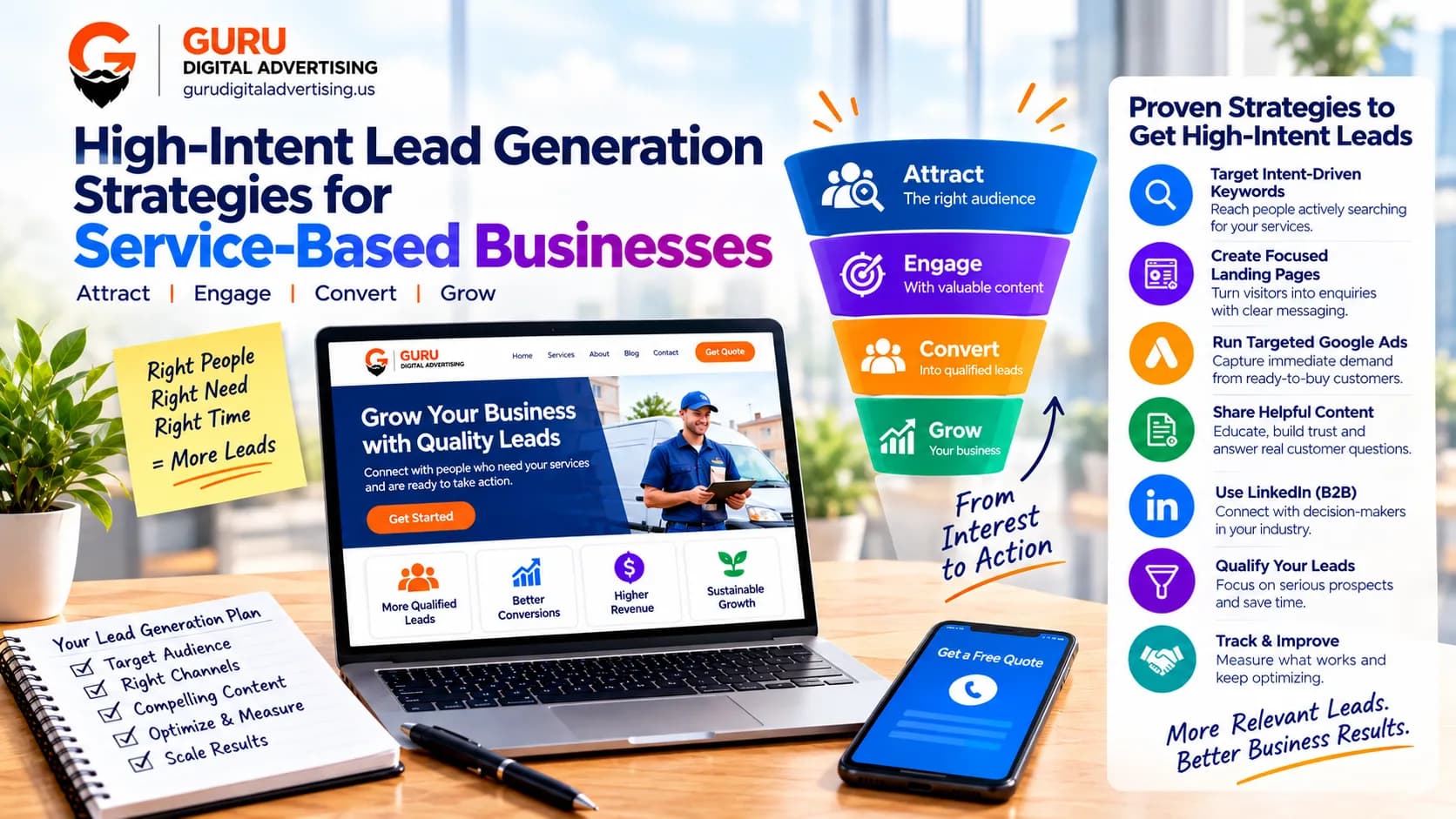
Finding leads is important, but finding people who need a service and are ready to act is more valuable. A service business can receive many inquiries and still struggle when prospects have little urgency, limited budgets, or no intention of buying. High-intent lead generation strategies shift the focus from collecting contacts to attracting prospects already moving toward a decision.
What Makes Lead Generation Strategies High-Intent?
A high-intent lead generation strategies has a clear need and is actively exploring solutions. This person may compare providers, search for pricing, read service pages, request a consultation, or complete an enquiry form. These actions show stronger purchase interest than simply viewing a social media post. Recognizing these signals helps sales teams spend more time with promising prospects.
Start With Buyer-Intent Keywords
Search behavior can reveal where someone is in the buying journey. Broad phrases may attract researchers, while specific service terms often indicate a stronger commercial purpose. Build keyword groups around services, locations, pricing, bookings, consultations, and comparisons.
Someone searching for “emergency AC repair near me” is likely at a different stage from someone searching for “how air conditioning works.” Using intent-focused keywords in SEO and paid campaigns can attract visitors closer to contacting a provider.
Build Landing Pages Around One Goal
Sending every advertisement to the homepage can create friction. A dedicated landing page should match the promise made in the advertisement or search result. Keep the page focused on one service and one primary action.
Explain the problem being solved, present relevant benefits, answer common concerns, add proof such as testimonials, and make the enquiry option easy to find. A focused landing page can turn existing demand into measurable inquiries instead of losing interested visitors.
Try Using Google Ads to Grab High Instant Demand
Paid search is useful when potential customers are actively looking for a service. Businesses can place targeted advertisements in front of people searching for relevant solutions.
High-intent lead generation strategies containing Google Ads campaigns should use related keywords, practical ad messaging, location targeting, negative keywords, and conversion tracking. The messaging should convey value rather than just listing features.
Track calls, form submissions, bookings, and other actions so budget decisions are based on outcomes.
Let SEO Build Long-Term Lead Flow
SEO can become a dependable source of qualified inquiries when it is built around commercial intent. Service pages can target searches made by people who already know what they need. Create useful pages for individual services, locations, customer problems, and buying questions.
Strengthen them with logical internal links and trustworthy information. Strong organic visibility can continue bringing relevant visitors after an advertising campaign ends. SEO therefore works well as the long-term foundation of an intent-focused strategy.
Use Content to Help Buyers Decide
Content marketing lead generation strategies should support the buying process, not just increase page views. Prospects often have questions before speaking with a provider. Create comparison articles, pricing explanations, case studies, FAQs, checklists, and practical guides.
Content that addresses objections can reduce uncertainty and prepare prospects for sales conversations. When content connects with service pages and enquiry options, it becomes part of the lead generation strategies.
Explore LinkedIn for B2B Services
Professional service companies often need to reach specific decision-makers rather than broad audiences. LinkedIn can help businesses target prospects according to job role, industry, or seniority.
A useful approach combines educational content marketing lead generation, targeted outreach, lead forms, and thoughtful follow-up. Relevant conversations can create a stronger path toward qualified business inquiries.
Add Lead Qualification
Not all of the queries require the same sales answer. A simple qualification process can separate serious opportunities from casual requests. Forms can ask about the service required, project scope, location, timeline, or budget range.
For larger sales processes, a CRM can score leads using relevant actions and characteristics. Keep qualification simple. Too many questions can discourage genuine prospects from completing the form.
Connect Marketing With Sales
It is very important for lead generation strategies that sales and marketing specialists should agree on what constitutes a lead. They should also establish response times and follow-up procedures. Sales feedback can reveal which campaigns generate customers, which create poor-fit enquiries, and which messages attract stronger prospects.
That information allows marketers to improve targeting and spending. Automation can support confirmations, reminders, routing, and basic nurturing while keeping human interaction available for important conversations.
Measure Quality, Not Just Quantity
Lead generation strategies producing hundreds of leads may appear successful until the business discovers that only a few are relevant. Lead quality should therefore be measured alongside volume. Track qualified leads, conversion rate, cost per qualified lead, sales opportunities, close rate, revenue, and customer acquisition cost.
Comparing channels helps identify where the strongest prospects originate. A smaller stream of relevant inquiries can be more valuable than a large database of inactive contacts.
Strengthen Trust Before Asking for Action
Service purchases often involve uncertainty. Customers want confirmation that a service understands their situation and can deliver on its promises. Use genuine reviews, testimonials, certifications, project examples, case studies, transparent service information, and clear contact details where appropriate.
Professional website design can also reduce hesitation. Trust should appear throughout the customer journey, from the first search result through the final inquiry.
Keep Testing and Improving
Intent changes across industries, seasons, audiences, and customer segments. A successful strategy now may require modifications in the future. Test keywords, offers, landing-page headlines, calls to action, audiences, and content formats.
Review results regularly and move budget toward activities producing better-quality opportunities. The goal is not a perfect campaign. It is a repeatable system that learns from customer behavior and becomes more efficient.
Conclusion
High-intent lead generation strategies mean reaching prospects when they have a meaningful need and a reason to act. For service-based businesses, the strongest approach combines intent-driven search, focused landing pages, useful content, targeted advertising, qualification, follow-up, and measurement.
When marketing teams stop chasing raw traffic and start analyzing buying signals, lead generation strategies become more purposeful. Businesses can reduce wasted sales effort, improve marketing efficiency, and create a healthier pipeline of prospects who are genuinely interested in becoming customers.
Continue reading for more information about:
- Google Ads vs. SEO: Which is most suitable for your business?
- Google Business Profile Optimization: Turn Your Local Listing Into a Customer-Ready Profile
- How a Web Designing Company in Mohali Improves User Experience
Ready to Generate High-Intent, Qualified Leads for Your Business?
Stop chasing raw clicks. Partner with Guru Digital Advertising for data-driven lead generation that drives revenue.
Talk to Guru Digital Advertising →